
Why Variety Matters: The Science Behind Recipe Rotation
By ThisWeekEats Team
January 11, 2025
8 min read
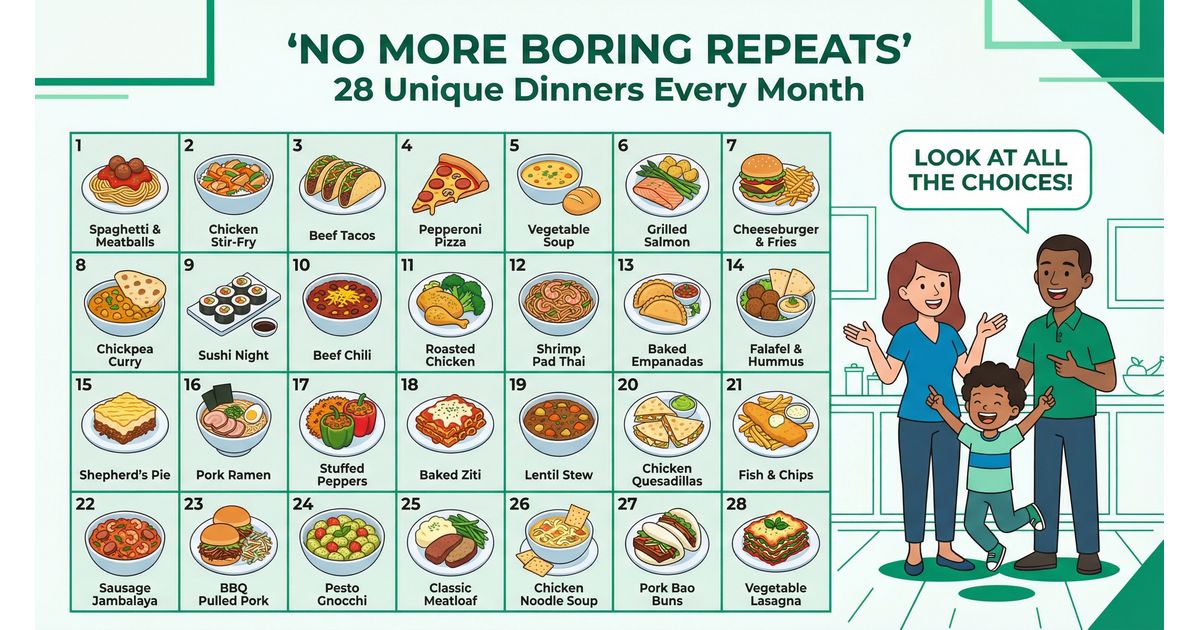
Why Variety Matters: The Science Behind Recipe Rotation
Week 1: Grilled chicken, steamed broccoli, brown rice. Week 2: Grilled chicken, steamed broccoli, brown rice. Week 3: Grilled chicken, steamed broccoli, brown rice. Week 4: "I can't eat another piece of chicken."
Sound familiar?
When meal planning feels overwhelming, we default to safe, repetitive meals. It's easier to make the same five dinners on rotation than to think of something new.
But here's the problem: nutritional variety matters—not just for your taste buds, but for your long-term health.
This article explores the science behind dietary diversity, why "chicken every night" syndrome is a nutritional (and psychological) trap, and how AI-powered meal planning solves the variety problem without adding stress.
The Science of Dietary Diversity
What Is Dietary Diversity?
Dietary diversity refers to the variety of different foods and food groups consumed over time. It's not just about eating "healthy foods"—it's about eating a wide range of healthy foods.
Examples:
- Low diversity: Chicken, broccoli, and rice every night
- High diversity: Rotating proteins (chicken, salmon, tofu, beef, eggs), rotating vegetables (broccoli, spinach, bell peppers, carrots, zucchini), rotating grains (rice, quinoa, pasta, bread, oats)
Why Diversity Matters: The Nutritional Science
No single food contains all the nutrients your body needs. Even "superfoods" like kale or salmon have nutritional gaps.
Key nutrients and their sources:
| Nutrient | Best Sources | |----------|--------------| | Iron | Red meat, lentils, spinach, fortified cereals | | Omega-3 Fatty Acids | Fatty fish (salmon, mackerel), walnuts, flaxseed | | Vitamin A | Carrots, sweet potatoes, spinach, liver | | Vitamin C | Citrus fruits, bell peppers, broccoli, strawberries | | Calcium | Dairy, fortified plant milk, leafy greens, tofu | | Fiber | Whole grains, beans, vegetables, fruits | | Protein (complete amino acids) | Meat, fish, eggs, dairy, quinoa, soy | | B Vitamins | Whole grains, meat, eggs, leafy greens, legumes |
The problem: If you eat chicken and broccoli every night, you're getting adequate protein and vitamin C, but you're potentially deficient in omega-3s (unless you eat fatty fish), iron (red meat and lentils are better sources), and vitamin A (carrots and sweet potatoes are superior).
The solution: Rotate your proteins, vegetables, and grains to ensure you're getting a broad spectrum of nutrients.
What the Research Says
Study 1: Dietary Diversity and Mortality Risk
A 2018 study published in the Journal of Nutrition followed 59,000 adults for 23 years and found:
- Individuals with higher dietary diversity had a 17% lower risk of all-cause mortality compared to those with low diversity
- Varied diets were associated with lower rates of cardiovascular disease, cancer, and type 2 diabetes
Key takeaway: Eating a wide range of foods is protective against chronic diseases.
Study 2: Phytonutrient Diversity
Harvard School of Public Health research emphasizes the importance of phytonutrient diversity—the plant compounds (antioxidants, polyphenols, carotenoids) found in fruits and vegetables.
Different colors = different phytonutrients:
- Red (tomatoes, strawberries): Lycopene (cardiovascular health)
- Orange (carrots, sweet potatoes): Beta-carotene (eye health, immune function)
- Yellow (bell peppers, corn): Lutein (eye health)
- Green (spinach, broccoli): Chlorophyll, folate (cellular health)
- Purple (blueberries, eggplant): Anthocyanins (brain health, anti-inflammatory)
Key takeaway: "Eat the rainbow" isn't just a catchy phrase—it's a strategy for maximizing phytonutrient intake.
Study 3: Gut Microbiome Diversity
Your gut contains trillions of bacteria (the microbiome) that influence digestion, immunity, and even mental health.
Research from the American Gut Project (2018) found:
- People who ate 30+ different plant foods per week had significantly more diverse gut microbiomes than those who ate fewer than 10
- Microbiome diversity is linked to better immune function, lower inflammation, and improved metabolic health
Key takeaway: Variety feeds your gut bacteria, which in turn supports your overall health.
The Psychological Benefits of Variety
Nutrition isn't just about vitamins and minerals—it's also about sustainability and enjoyment.
Flavor Fatigue: Why You Get Bored
Flavor fatigue (also called sensory-specific satiety) is a psychological phenomenon where repeated exposure to the same food decreases your desire to eat it.
Example:
- You love pizza on Friday night (exciting!)
- You eat pizza again on Saturday (still good)
- You eat pizza again on Sunday (starting to feel "meh")
- By Monday, you never want to see pizza again
Why this matters for meal planning:
- If you eat grilled chicken every night, you'll grow tired of it—even if you initially loved it
- When you're bored with your food, you're more likely to:
- Skip meals (leading to poor nutrition)
- Order takeout (expensive and often less healthy)
- Abandon your meal plan (defeating the purpose)
The solution: Rotate meals frequently to keep food exciting and prevent flavor fatigue.
The "Treat" Factor: Variety Increases Satisfaction
Research in appetite psychology shows that people rate meals as more satisfying when they include variety—even if the total calories are the same.
Example:
- Meal A: Grilled chicken, broccoli, rice (same as last week)
- Meal B: Teriyaki salmon, roasted bell peppers, quinoa (different from last week)
Even if both meals are equally nutritious and caloric, Meal B feels more satisfying because it's novel.
Key takeaway: Variety makes meals feel like "treats" rather than obligations—which increases long-term adherence to healthy eating.
The "Chicken Every Night" Syndrome
Let's talk about the most common meal planning trap: defaulting to the same protein over and over.
Why It Happens
When you're tired and overwhelmed, you default to what's:
- Familiar (you've made it before)
- Safe (everyone will eat it)
- Easy (you don't have to think)
For many families, that default is chicken.
The problem:
- Nutritional monotony: You miss out on nutrients from other proteins (omega-3s from fish, iron from beef, plant-based nutrients from tofu/lentils)
- Flavor fatigue: Everyone gets sick of chicken
- Recipe stagnation: You're stuck making the same 3-4 chicken recipes forever
The Optimal Protein Rotation
To maximize nutritional diversity, aim to rotate proteins throughout the week:
Sample Week:
- Monday: Chicken (lean protein, B vitamins)
- Tuesday: Salmon (omega-3 fatty acids, vitamin D)
- Wednesday: Ground beef (iron, zinc, B12)
- Thursday: Tofu or lentils (plant-based protein, fiber)
- Friday: Eggs or shrimp (versatile, quick-cooking)
- Saturday: Pork or turkey (alternative poultry, variety)
- Sunday: Beans or chickpeas (fiber, plant-based nutrients)
Notice:
- No protein repeats within the week
- Balance of animal and plant proteins
- Variety of nutrients (omega-3s, iron, B vitamins, fiber)
This isn't restriction—it's intentional variety for better health.
How AI Meal Planning Solves the Variety Problem
Traditional meal planning makes variety hard:
- You have to remember what you cooked last week (to avoid repetition)
- You have to research new recipes (time-consuming)
- You have to balance nutrition across the week (mentally exhausting)
AI meal planning automates variety.
1. Automatic Protein Rotation
The system tracks when you last ate each protein and ensures you don't repeat too frequently.
Example settings:
- Chicken: Max 2-3 times per week
- Beef: Max 1-2 times per week
- Fish: Min 1 time per week
- Plant-based: Min 1 time per week
Result: You get a naturally diverse week of proteins without thinking about it.
2. Recipe Pool Intelligence
The AI draws from large recipe pools to prevent repetition:
- Breakfast pool: 3-15 recipes
- Lunch pool: 5-25 recipes
- Dinner pool: 15-60 recipes
Smaller pools = more repetition:
- Good for families who like routine and predictability
Larger pools = more variety:
- Good for adventurous eaters who get bored easily
You control the balance based on your preferences.
3. Cuisine Variety
The AI automatically rotates cuisines to prevent monotony:
- American comfort food (burgers, meatloaf, casseroles)
- Italian (pasta, risotto, chicken parmigiana)
- Mexican (tacos, enchiladas, fajitas)
- Asian (stir-fries, teriyaki, fried rice)
Your adventure level controls how exotic the AI gets:
- Conservative: Stick to familiar American and Italian
- Moderate: Include Mexican and basic Asian (teriyaki, fried rice)
- Adventurous: Add Thai, Indian, Vietnamese, Korean
Result: Variety without intimidation.
4. Vegetable and Grain Rotation
It's not just about protein—variety matters for vegetables and grains too.
AI meal planning ensures:
- Vegetables rotate: Broccoli Monday, bell peppers Tuesday, spinach Wednesday, carrots Thursday, zucchini Friday
- Grains rotate: Rice, quinoa, pasta, bread, couscous, bulgur
- Fruits rotate: Berries, apples, oranges, bananas, melons
You get the nutritional spectrum automatically.
Recipe Frequency Control: Balancing Variety and Familiarity
Some families love new recipes every week. Others prefer a predictable rotation of favorites.
AI meal planning lets you control this balance.
Option 1: High Variety (Large Recipe Pools)
Settings:
- Dinner pool: 40-60 recipes
- Lunch pool: 20-25 recipes
- Breakfast pool: 10-15 recipes
Result:
- Meals repeat every 2-3 months
- Constant novelty and excitement
- Great for adventurous eaters
Option 2: Moderate Variety (Medium Recipe Pools)
Settings:
- Dinner pool: 20-30 recipes
- Lunch pool: 10-15 recipes
- Breakfast pool: 5-8 recipes
Result:
- Meals repeat every 3-4 weeks
- Familiar favorites with occasional new recipes
- Balanced approach for most families
Option 3: Low Variety (Small Recipe Pools)
Settings:
- Dinner pool: 10-15 recipes
- Lunch pool: 5-8 recipes
- Breakfast pool: 3-5 recipes
Result:
- Meals repeat every 1-2 weeks
- Highly predictable and routine
- Great for picky eaters or families who value consistency
You choose the level of variety that works for your family.
Variety Without Overwhelm
Here's the paradox of traditional meal planning:
- Too little variety → boring, nutritionally limited
- Too much variety → overwhelming, stressful
AI meal planning solves this by automating variety:
- You don't have to remember what you ate last week
- You don't have to research new recipes
- You don't have to manually balance nutrition
The system does it for you—automatically, invisibly, effortlessly.
Result: You get the nutritional and psychological benefits of variety without the cognitive burden.
The Bottom Line: Variety = Health + Satisfaction
Nutritional science is clear:
- Dietary diversity supports long-term health
- Rotating proteins, vegetables, and grains maximizes nutrient intake
- Gut microbiome diversity depends on eating 30+ different plant foods weekly
Psychological science is clear:
- Flavor fatigue kills meal plan adherence
- Variety increases meal satisfaction
- Boredom leads to takeout (expensive, less healthy)
AI meal planning makes variety automatic:
- Protein rotation (no more "chicken every night")
- Recipe pools (controlled variety based on your preferences)
- Cuisine diversity (familiar to adventurous, based on your comfort level)
- Vegetable and grain rotation (nutritional spectrum coverage)
You get better nutrition, happier meals, and zero mental effort.
Ready to Experience Effortless Variety?
Try ThisWeekEats free for 7 days. Set your recipe pool sizes, generate your first meal plan, and discover how variety can be automatic—not stressful.
Medical Disclaimer
This article provides general information about nutrition and dietary diversity based on research from reputable sources including Harvard School of Public Health, the Journal of Nutrition, and the American Gut Project. Individual nutritional needs vary based on age, health conditions, activity level, and other factors. Always consult with a registered dietitian, physician, or other qualified healthcare professional for personalized dietary guidance, especially if you have existing health conditions, food allergies, or specific dietary requirements.
Ready to Experience AI Meal Planning?
Try ThisWeekEats free for 7 days. No credit card required.
Start Your Free Trial